Building a Justice System That Works for Everyone
What does it take to build a justice system that works for everyone?
It starts with bringing the right people together, listening to the experiences of those most affected by gaps in the justice system, and turning those conversations into meaningful action.
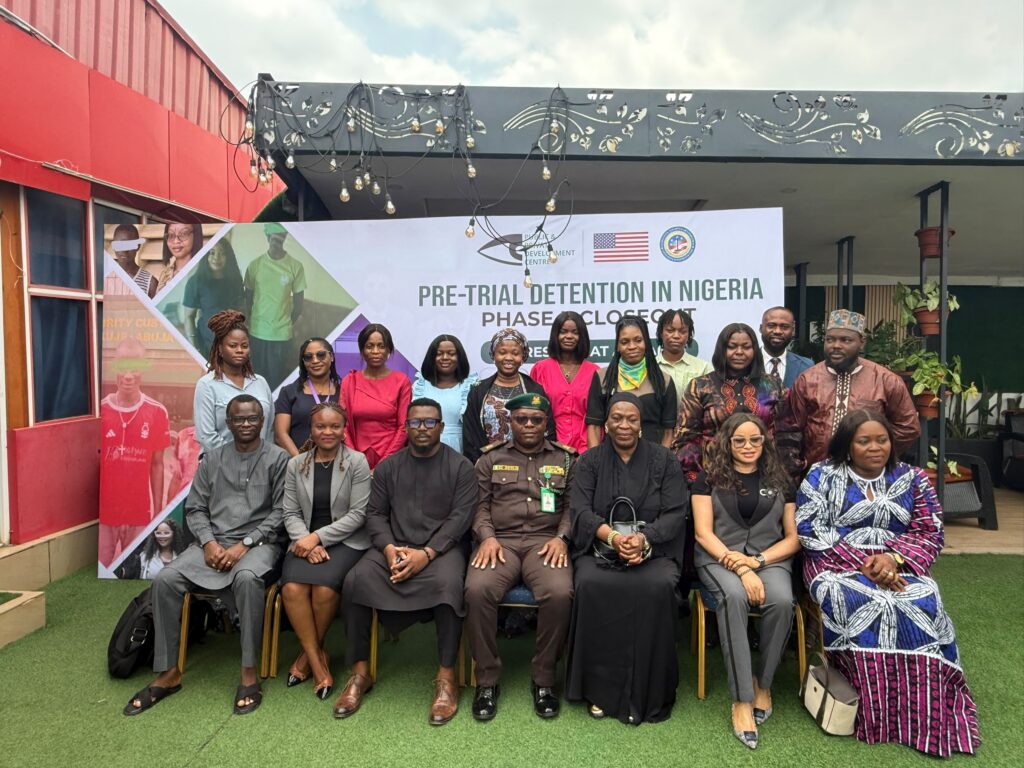
The Asabe Waziri Justice Advocacy Initiative (AWJAI) was pleased to participate in the Second Access to Justice Meeting, hosted by the Public and Private Development Centre (PPDC). The Meeting brought together justice-sector institutions, civil society organisations, legal practitioners, development partners and other stakeholders to examine practical and sustainable ways to strengthen access to justice in Nigeria.
For AWJAI, conversations around access to justice are not abstract. They are closely connected to the realities we encounter through our legal aid interventions, police and detention monitoring, prison visits, and engagement with people whose lives have been disrupted by the justice system.
Justice Must Be Accessible, Not Merely Available
Nigeria has laws, institutions and mechanisms designed to protect the rights of individuals and provide pathways to justice. Yet, for many people, barriers such as poverty, limited legal awareness, prolonged detention, delays in court proceedings and inadequate access to legal representation can make justice difficult to reach.
This is why access to justice must be understood beyond the courtroom.
It is about timely legal intervention.
It is about accountability within justice institutions.
It is about protecting the rights and dignity of people in police and correctional custody.
It is about ensuring that vulnerable people are not left behind because they cannot afford legal assistance.
And it is about building systems that respond to people’s needs before a legal problem becomes a life-changing crisis.
At AWJAI, our work is grounded in the belief that justice should not be determined by a person’s income, social status or ability to navigate complex institutions. Through legal aid, justice-sector monitoring, human rights advocacy and community engagement, we work towards a justice system that is more accessible, accountable and responsive to those who need it most.
From Conversation to Collective Action
The Second Access to Justice provided an important platform for stakeholders to exchange experiences, identify persistent challenges and consider practical approaches to improving Nigeria’s justice system.
Dialogue must lead to action.
Building a justice system that works for everyone requires collaboration across institutions and sectors. Government institutions, legal practitioners, civil society organisations, development partners and communities each have a role to play.
It requires stronger referral pathways, greater investment in legal aid, improved accountability mechanisms, timely resolution of cases and continued efforts to ensure that people understand and can exercise their rights.
Most importantly, it requires keeping the experiences of people like Richard at the centre of the conversation.
Because behind every statistic is a person.
Behind every delayed case is a life waiting to move forward.
And behind every person who struggles to access justice is an opportunity for the justice system to do better.
Access to justice is a shared responsibility. And building a justice system that works for everyone begins when we choose to work together to make justice not only available, but genuinely accessible.